
Snow Day Calculator
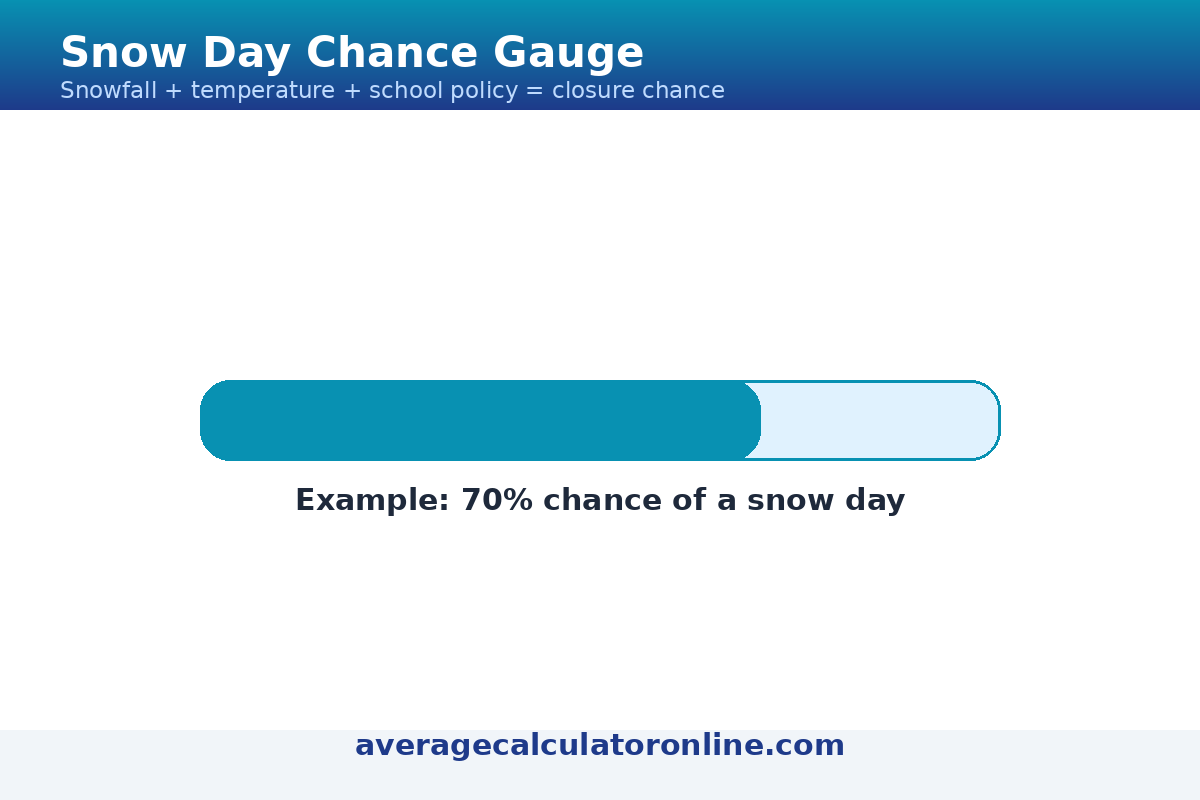
Direct answer: A snow day calculator estimates the chance that school will close for snow. It scores the forecast: every inch of snow adds points, freezing temperatures add points, and overnight snowfall adds points. A score of 85% or higher means a very high chance of a snow day.
Snow day chance: 85% — Very high chance
Snow points: 60 · Freezing bonus: 15 · Overnight bonus: 10
How the snow day score works
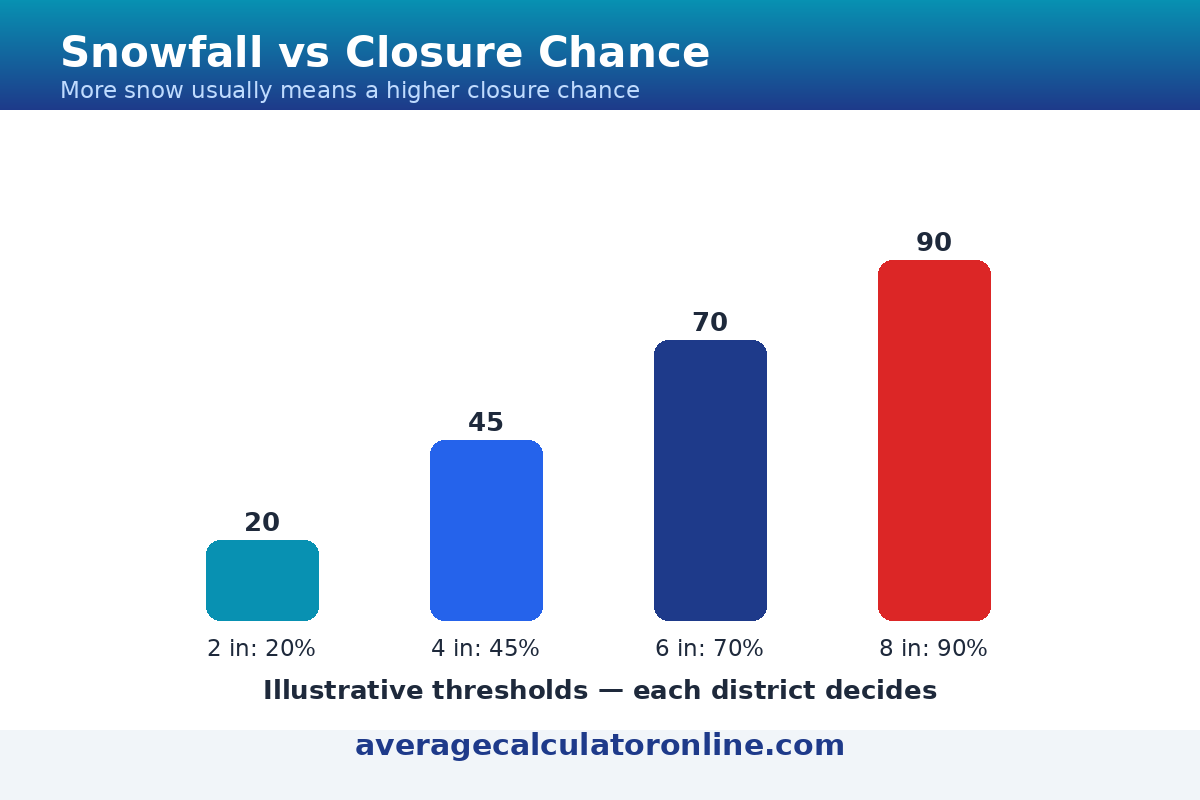
The calculator uses a simple transparent scoring model. Step 1: snowfall points — 10 points per forecast inch of snow. Step 2: freezing bonus — 15 points if the low temperature is 32°F or below, because snow sticks and roads ice over instead of melting. Step 3: timing bonus — 10 points if most snow falls overnight or before the morning commute, when buses and plows are under the most pressure. Step 4: the total is capped at 95%, because no forecast model can promise a closure.
Snow day chance bands
| Score | Chance band | What it means |
|---|---|---|
| 0–29% | Low chance | School almost certainly opens. |
| 30–59% | Moderate chance | Delays are possible; closures less likely. |
| 60–84% | High chance | Many districts would seriously consider closing. |
| 85–95% | Very high chance | A classic snow day setup. |
The bands above are percentages of the 95-point maximum score — the Percentage Calculator converts any point total into a percentage.
Worked examples
Example 1: 6 inches of snow, low of 28°F, falling overnight. Score = (6 × 10) + 15 + 10 = 85% — Very high chance.
Example 2: 4 inches of snow, low of 30°F, falling overnight. Score = (4 × 10) + 15 + 10 = 65% — High chance.
Example 3: 2 inches of snow, low of 35°F, falling during the day. Score = (2 × 10) + 0 + 0 = 20% — Low chance. The temperature above freezing means much of it may melt on contact.
What this calculator does not consider
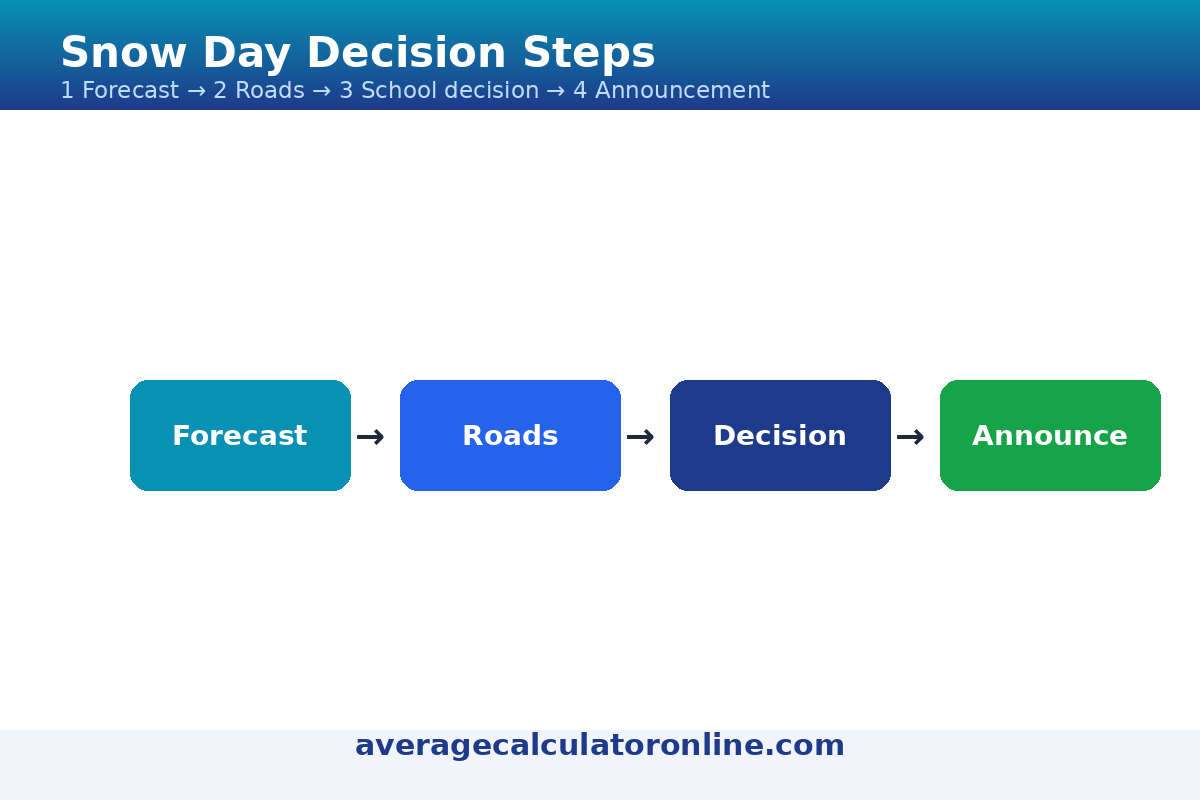
Real closure decisions also depend on wind chill, ice versus snow, road treatment, bus routes, and each district’s own policy — some districts close at 3 inches, others stay open at 8. A forecast can also shift overnight. That is why this tool is a fun planning estimate, not a prediction of any official decision.
Tips for snow days
Check your school district’s official announcements and local news before assuming a closure. If a high chance is showing, charge devices, keep water and food ready, and avoid non-essential travel during the storm. Teachers and parents often use the evening forecast, not the morning one, to plan the next day.

FAQs
What is a snow day calculator?
A snow day calculator estimates the chance of a school closing from a snow forecast, using snowfall amount, temperature, and timing.
How accurate is a snow day calculator?
It is a rough estimate, not an official forecast. It captures the main drivers of closures but cannot know a district’s policy, road conditions, or last-minute forecast changes.
How much snow usually closes schools?
It varies widely by region. Snow-ready districts may stay open in 6 inches, while districts that rarely see snow may close at 2–3 inches.
Does temperature matter for a snow day?
Yes. At or below 32°F snow accumulates and roads ice over; above freezing, snow often melts on contact and closures are less likely.
Why does overnight snow matter more?
Snow falling overnight hits the morning commute and bus routes before plows can fully clear roads, which weighs heavily in closure decisions.
Can I rely on this for school decisions?
No. Always follow your school district’s official announcements — this calculator is for fun and planning only.
Disclaimer: This calculator is for fun and planning only — it is not an official weather forecast.
Related calculators: Time Calculator · Percentage Calculator · Scientific Calculator
Last updated: November 1, 2026.